Where It Started: Learning to Photograph Underwater
Long before wildlife photography became the focus of Studio Ott, there was diving.
I have always loved being in the water. Maybe it is because I am a water sign, maybe because my first swim lesson happened before I was even one year old, or maybe it is just one of those things that never really needed an explanation. However it started, that comfort in the water eventually became a direct path to scuba diving.
Both of my parents were certified, but neither of them dove often enough for it to feel like something I inherited from them. The real push came from me. As soon as I learned I was old enough to get certified, I signed myself up and asked my mom to drive me to the late-night classes and pool sessions, usually on my own.
My certification dives happened in a lake in Texas, which is not exactly where underwater photography dreams begin. Visibility was terrible. I could barely see a few feet in front of me, let alone imagine taking photos down there. Still, once I finished certification, diving quickly became something I wanted to do anywhere I could, and over time my favorite dive buddy became my dad.
At that point I was already carrying a camera everywhere above water, so it did not take long before I wanted to bring one below the surface too. When I got my Ikelite housing for my Canon EOS Rebel T1i, I immediately started testing it in the pool before trusting it anywhere deeper. I probably spent more time checking for leaks than actually taking pictures those first few days.
The first real trip with it was in Mexico, where I slowly started figuring out the basics: how the strobe behaved underwater, how long macro focus could take, and maybe most importantly, how not to burn through all of my air while trying to get one perfect shot.
That last part took some work.
Underwater photography is not intuitive at first. You are breathing through a regulator, bubbles are moving across your mask, you are trying to look through a small viewfinder, and sometimes the subject you are photographing is smaller than your fingernail. It can feel like too much all at once. The biggest breakthrough for me was realizing that if my breathing stayed calm, everything else got easier too. Once I slowed down, I started seeing more and missing less.
A lot of my early mistakes came from strobe placement. Underwater lighting is its own challenge because unlike a built-in flash, the strobe has to be positioned differently for almost every shot. Too close and everything is blown out. Too far and the image goes flat. I still have plenty of photos from those early trips that are either far too bright or too dark, and I remember how frustrating that felt when I knew the subject itself had been worth the effort.
What makes underwater photography even harder is that you are usually diving with a group that does not have cameras. Most people see the fish, enjoy the moment, and move on. I never wanted to move on that quickly. I wanted to stay long enough to get the shot, which meant learning how to set up quickly, take the image, and still keep pace with everyone else.
One trip to Indonesia changed everything. I enrolled in an underwater photography course there, and it was the first time I really learned how to photograph marine life intentionally rather than just hopefully. That was where I started understanding strobe angles, how to shoot different subjects more deliberately, and how editing could bring underwater color back to life. It was also my introduction to Adobe Lightroom, which quickly became part of the process after every trip.
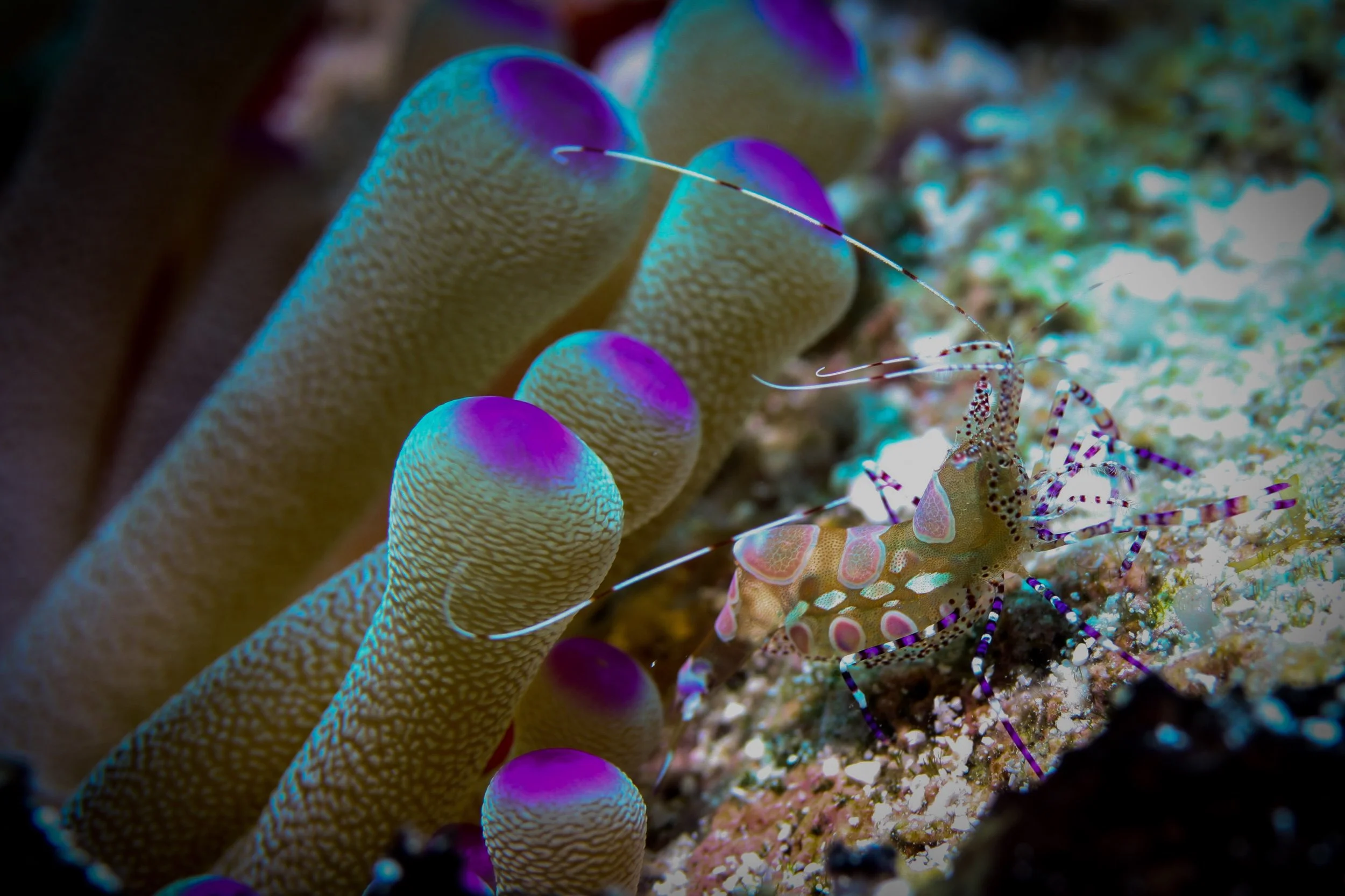
What I love most about photographing underwater is how calm it makes me. Diving has always had that effect on me. My whole body relaxes in a way it rarely does anywhere else. Everything gets quieter, both physically and mentally. With a camera, that calm becomes focus. Instead of just floating, I start searching. Looking closely. Wondering what might be hiding in the coral or tucked into the sand.
That habit definitely carried onto land. I notice tiny things quickly, underwater and above it. I am usually the person who spots the hidden animal first, whether it is a fish blending into rock or something small everyone else walked right past. I like to think it also explains why I am unusually competitive during Easter egg hunts and escape rooms.
One thing underwater photography taught me that I appreciate every time I shoot on land is how simple a camera feels without a housing around it. Underwater there is always more to manage: goggles, bubbles, controls through thick plastic, limited movement, changing buoyancy. On land, even with a larger lens, it feels light by comparison. I do not think I would appreciate how easy it is to bring a camera fully to your face if I had not learned underwater first.
People often ask if photographing sharks or other marine life changed how I think about wildlife more generally. I think what it changed most is my comfort around animals people tend to fear. Whether it is sharks, barracuda, or even lions later on safari, I have never approached them with panic. The goal is always the same: move slowly, stay calm, and do not interrupt what they are already doing.
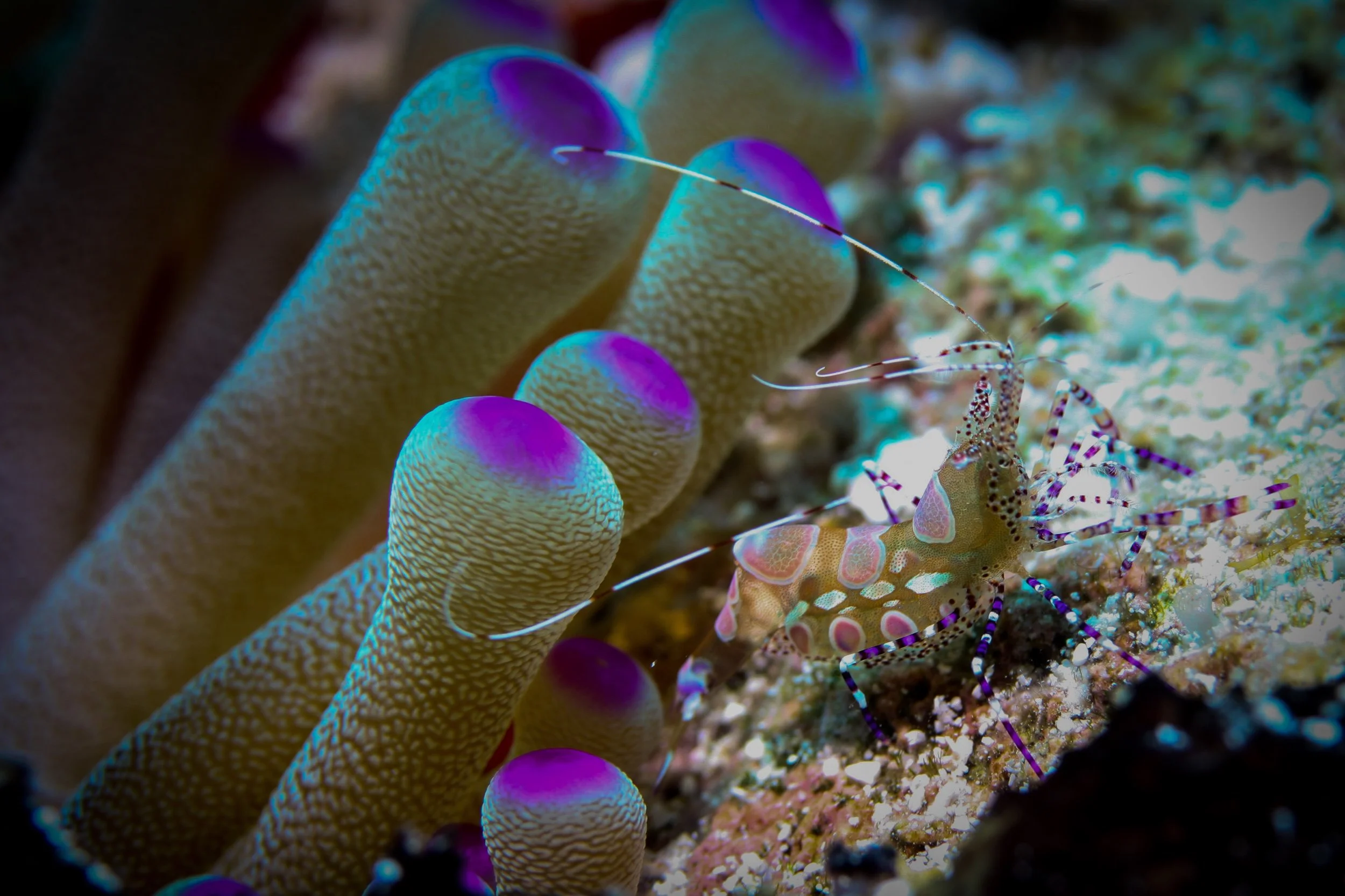
Some of my favorite underwater subjects are still the small ones. A juvenile drumfish in Mexico, a boxfish in Indonesia, seahorses, nudibranchs, anything that blends in so well you almost miss it completely. I love when something tiny turns out to be the most exciting thing on the dive.
One underwater moment I wish everyone could experience happened in Cozumel. My dad and I were diving in an unusually strong current. Most of the group had already surfaced because they were low on air, so it was just us and the divemaster left. By then we had passed the reef and were drifting over open sand. Out of nowhere, the divemaster kicked off his fins and started running across the ocean floor.
My dad and I followed immediately.
It was ridiculous and so much fun. We were laughing underwater, trying to keep up, carried by the current and running across the sand eighty feet below the surface. It is one of those moments that had nothing to do with photography but still reminds me why I love diving in the first place.
I still use that original camera underwater today, partly because I trust it and partly because I know exactly what would happen if I flooded the housing one day. That possibility is always there. Every underwater photographer knows the fear of noticing a slow stream of bubbles coming from the case and realizing there is absolutely nothing you can do until you surface.
If that day ever comes, I would rather lose an older camera than something new.
The setup is not perfect anymore. The hinges show a little rust no matter how carefully I clean and dry everything after a trip. But it still gives me exactly what I need: reliable focus, manageable size, and a system I know well enough not to think too hard about once I am underwater.
Sometimes older gear keeps earning its place simply because it still works.
And underwater, that is usually enough
Related Blogs